
The next important creator might not have millions of followers
The next big opportunity in the creator economy may be finding commercially powerful creators before their follower counts make them look important.
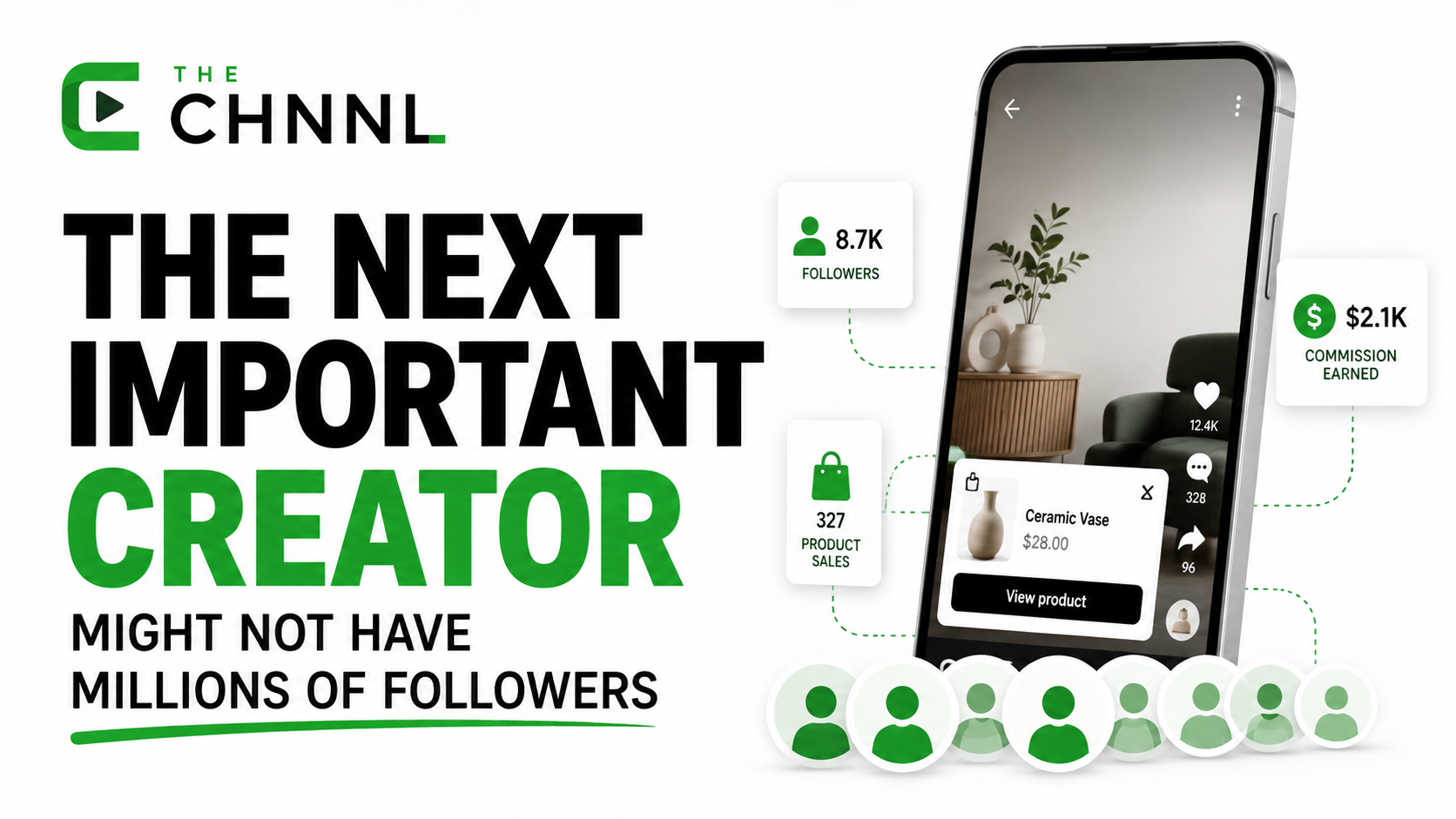
For much of the creator economy's development, follower count has operated as a kind of unofficial currency, because the bigger the audience became, the more important the creator appeared to brands, the more money they could potentially command for partnerships, and the easier it was for marketers to justify putting significant budgets behind them.
That logic made sense when social media was primarily an audience business.
If a creator had five million followers and another had 5,000, the first creator appeared to offer a brand something fundamentally more valuable: access to vastly more people.
But social platforms are changing, creator commerce is becoming more sophisticated, algorithms increasingly decide which individual pieces of content travel rather than simply distributing everything to somebody's existing followers, and brands are becoming much better at measuring what happens after somebody actually sees a creator's recommendation.
The result is that one of the oldest assumptions in influencer marketing is beginning to look increasingly outdated.
The next commercially important creator might not have millions of followers at all.
They might have 50,000.
They might have 5,000.
In some circumstances, they might have 500.
And that could fundamentally change who gets to participate in the creator economy.
Brands are already putting more money behind smaller creators
This is not simply an argument that small creators deserve more attention.
The money is already moving.
EMARKETER estimates that micro and nano influencers will account for 45.5% of influencer marketing spending in 2026, while reporting from The Wall Street Journal shows major businesses including Target, American Eagle, Little Spoon and SoulCycle developing programmes that allow considerably smaller creators to participate in brand advocacy, sometimes opening opportunities to people with audiences as small as 500 followers.
The Wall Street Journal reports that the proportion of U.S. influencer marketing spending going to creators with fewer than 20,000 followers is expected to reach around 45% this year, compared with 19.5% in 2021, while nano-influencers with fewer than 5,000 followers are expected to capture 19.9%, up dramatically from just 3.1% five years earlier.
Those numbers suggest something much bigger than brands experimenting with cheaper influencers.
They suggest the definition of a commercially valuable creator is expanding.
The algorithm weakened the relationship between followers and distribution
One of the biggest reasons for this shift can be found in the platforms themselves.
Social feeds increasingly operate around recommendations rather than subscriptions, particularly on TikTok, where somebody does not necessarily need to follow a creator before being served their content, meaning an account with a relatively small established audience can produce a video that reaches hundreds of thousands or potentially millions of people.
That creates an important distinction between audience size and content distribution.
A creator's follower count tells us how many people have previously chosen to follow them.
It does not necessarily tell us how many people their next piece of content can reach.
Paul Archer, founder and CEO of brand advocacy platform Duel, told The Wall Street Journal that large creators can no longer guarantee that their followers will actually see a particular advertisement, while content from somebody with a tiny audience can travel enormously if it resonates with the algorithm and the people encountering it.
For brands, that changes the calculation.
Instead of paying primarily for access to somebody else's accumulated audience, they can increasingly pay for the creator's ability to make content that works.
Those are not necessarily the same thing.
TikTok Shop makes this even more important
Social commerce takes the argument considerably further because platforms such as TikTok Shop can connect creator content directly to transactions.
The creator does not necessarily need to convince a brand that their audience is valuable before they can begin proving their commercial value.
They can sell.
TikTok's own documentation shows how seriously the platform is taking smaller creators, including an Affiliate Creator Pilot Program in the United States that allows promising creators below its traditional 5,000-follower threshold to begin monetising through TikTok Shop, albeit with restrictions while they remain in the programme.
That matters because commerce provides a different scoreboard.
A creator with 8,000 followers who repeatedly sells products can potentially become considerably more commercially interesting than somebody with 800,000 followers whose audience watches but rarely buys.
There are already individual examples demonstrating how dramatically that can play out.
Chelsea Bennett, a creator with fewer than 10,000 combined followers across TikTok and Instagram, recently told People that one TikTok Shop video generated approximately $2,000 for her, despite the fact that she had yet to secure a conventional paid brand partnership.
That is an interesting contradiction.
By the traditional influencer economy's measurement system, she may still be considered too small for some brands to pay.
By the commerce economy's measurement system, she has already demonstrated that her content can generate transactions.
Brands may start looking for creators differently
This is where the shift becomes particularly important for the companies, agencies and platforms surrounding creators.
For years, creator discovery has naturally placed significant emphasis on numbers that are easy to see: followers, views, likes and engagement rates.
Commerce adds another layer.
What does this person make people do?
Can they convince somebody to investigate a product?
Can they explain something complicated?
Can they make an ordinary product interesting?
Can they produce a video that performs organically?
Can they generate clicks?
Can they generate purchases?
Can they repeatedly create content that a brand would be willing to put advertising money behind?
A creator answering those questions positively may be valuable long before their follower count makes them look important.
That means creator scouting could increasingly begin to resemble talent scouting in other industries, where the opportunity is not simply to identify the biggest person today, but to recognise somebody demonstrating unusual ability before everybody else does.
There is an authenticity problem hiding inside the creator economy
There is another reason smaller creators matter.
Brands repeatedly say they want authenticity, relevance and genuine relationships between creators and their audiences, but research suggests the economics of the industry do not always reward those qualities.
CreatorIQ's 2026 State of Creators study, based on responses from more than 5,000 creators across 100 regions, found that creator earnings continue to track follower counts and views more closely than engagement, despite brands placing significant emphasis on authenticity and audience connection. The same research found that 67% of creators earn less than $10,000 annually from content creation, demonstrating how concentrated the economic rewards of the industry remain.
That creates an interesting tension.
The industry says engagement matters.
It says trust matters.
It says niche communities matter.
It says authenticity matters.
But historically, enormous reach has still commanded enormous attention.
Smaller creators challenge that model because their commercial value can sometimes come precisely from the things that do not appear impressive on a media kit.
A creator might have only 3,000 followers because they talk about an incredibly specific hobby, profession, parenting experience, beauty concern, gaming community or lifestyle.
For a business selling directly into that niche, however, those 3,000 people could be far more useful than 300,000 loosely interested followers somewhere else.
The creator economy could become much bigger because of this
Perhaps the most interesting consequence is what happens to the definition of a creator itself.
If meaningful commercial opportunities require millions of followers, the creator economy is inevitably dominated by a relatively small group of people who manage to build enormous audiences.
If brands can work profitably with people who have 50,000, 10,000, 5,000 or even hundreds of followers, the potential workforce becomes enormous.
The Influencer Marketing Factory's 2026 Creator Economy Report, based on millions of creator accounts across Instagram, TikTok and YouTube, describes an ecosystem heavily populated by micro influencers and smaller creators, meaning the supply of potential commercial talent already exists.
The infrastructure is now beginning to catch up with them.
Affiliate programmes allow creators to monetise sales without negotiating individual sponsorship agreements.
TikTok Shop connects content directly with products.
Creator marketplaces help brands discover talent.
Paid boosting allows companies to take content from smaller creators and distribute it beyond the creator's organic audience.
And increasingly sophisticated attribution systems allow brands to measure whether those creators actually generated results.
Together, those changes reduce the importance of owning enormous distribution before somebody can become commercially useful.
Millions of followers will still matter
None of this means the mega influencer is disappearing.
There will always be enormous value in creators capable of reaching millions of people, shaping culture and turning products into mainstream conversations, particularly when brands want mass awareness rather than immediate transactions.
Celebrity level creators can do something that thousands of small accounts cannot necessarily reproduce: make something feel culturally important.
But they may no longer represent the only form of important creator.
The creator economy appears to be developing multiple types of influence simultaneously.
There are creators who provide reach.
Creators who provide authority.
Creators who provide entertainment.
Creators who produce exceptional advertising content.
Creators who dominate particular niches.
Creators who generate sales.
And creators who may have relatively modest audiences but extraordinary relationships with the people who do follow them.
The mistake would be measuring all of those people using the same number.
The next important creator might already be creating
Somewhere right now there is probably somebody producing videos after finishing work, filming products in their bedroom, talking enthusiastically about an obscure interest, reviewing things they genuinely buy, or slowly building an audience that would look almost irrelevant beside the biggest names on social media.
They might have 800 followers.
A brand manager scrolling past their account might barely notice them.
But the algorithms no longer require that creator to accumulate a million followers before one piece of content can reach a million people, while affiliate commerce increasingly means they do not need a conventional sponsorship before demonstrating that they can influence purchasing behaviour.
That changes what it means to discover creator talent.
The creator economy spent its first era asking:
How many people follow you?
Its next era may increasingly ask a much more commercially useful question:
What happens when people watch you?
And once that becomes the question, the next important creator could come from almost anywhere.
Related stories
TikTok Shop is changing what it means to be a creator
TikTok Shop is turning creators from attention generators into participants in the transaction itself and changing what commercial influence looks like.
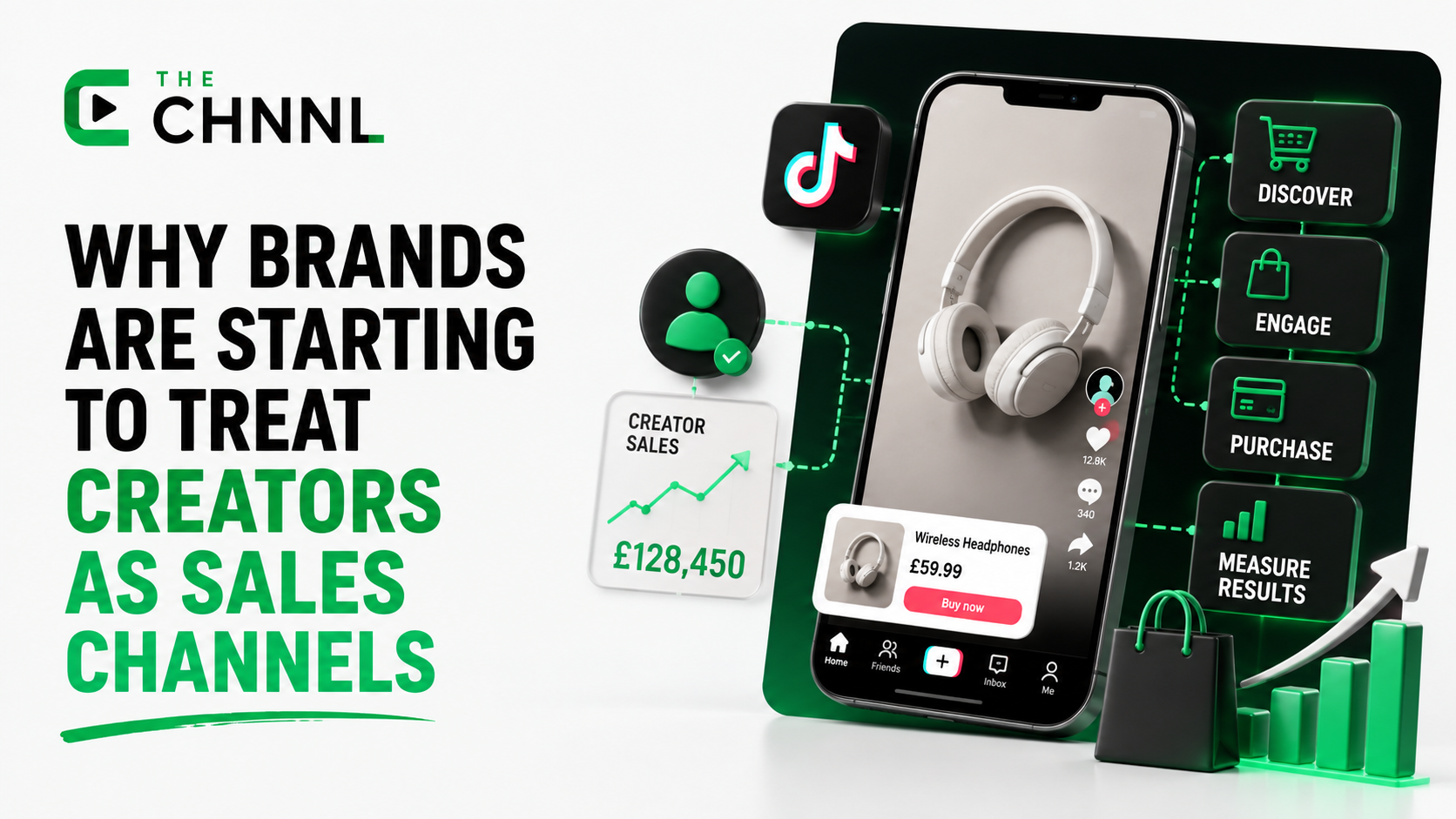
Why brands are starting to treat creators as sales channels
Creators are moving closer to the transaction, giving brands something more powerful than attention alone: a new way to sell products.
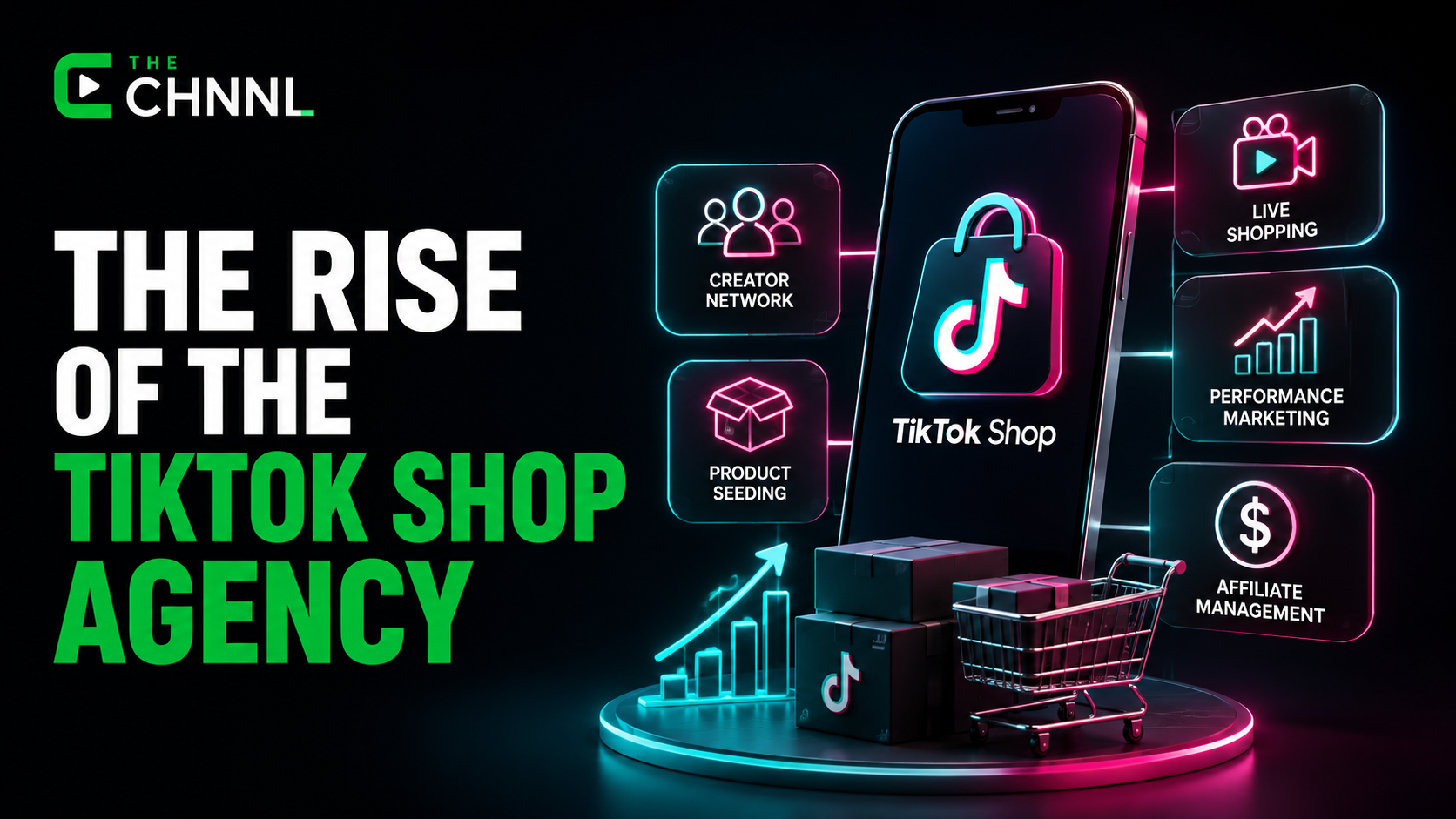
The rise of the TikTok Shop agency
TikTok Shop is creating a new agency model: part influencer network, part ecommerce operator, part LIVE studio and part performance marketing company.