
TikTok Shop is changing what it means to be a creator
TikTok Shop is turning creators from attention generators into participants in the transaction itself and changing what commercial influence looks like.
For most of the social media era, becoming a successful creator followed a relatively predictable path: build an audience, accumulate followers, generate enough views to become interesting to advertisers, and eventually hope that brands would pay you to place their products in front of the community you had spent years building.
TikTok Shop is beginning to disrupt that sequence.
A creator can now discover a product, promote it through a short video or livestream, attach the product directly to the content and earn a commission when somebody buys it, creating a model in which the creator is no longer simply being paid for access to an audience but can participate directly in the transaction their content generates.
That distinction sounds small.
Commercially, it is enormous.
Because TikTok Shop is helping create a type of creator whose most important metric might not be how many followers they have, how famous they are or how much a company will pay them for a sponsored post.
It might simply be:
Can this person sell?
The traditional creator economy was built around attention
The first generation of the creator economy was fundamentally an attention business.
YouTube creators accumulated subscribers.
Instagram influencers accumulated followers.
TikTok creators accumulated views.
Those audiences could then be monetised through advertising, sponsorships, subscriptions, merchandise and other products, but in many cases the creator's primary asset remained their ability to attract and retain attention.
Brands therefore naturally evaluated creators using measurements such as followers, reach, impressions, views and engagement.
The larger the audience became, the easier it was to understand the creator's commercial proposition.
TikTok Shop introduces a different measurement system because the platform connects content and transactions much more closely.
Creators can participate in TikTok Shop's affiliate system, recommend products through shoppable videos and LIVE shopping, and earn commissions when those recommendations convert into purchases. In Ireland, for example, TikTok says participation in its Shop affiliate programme grew by 600% following launch, with more than €2 million in commissions paid to Irish creators by May 2026.
The creator is still producing content.
But the economic purpose of that content can be very different.
A creator can increasingly operate like a salesperson
There is a word the creator economy has traditionally been slightly uncomfortable using.
Selling.
Influencers recommend things.
Creators collaborate with brands.
People share their favourite products.
Campaigns generate awareness.
TikTok Shop makes the transaction much more explicit.
A creator demonstrating a vacuum cleaner during a LIVE broadcast, explaining why they use a particular skincare product or showing viewers how an item of clothing fits is simultaneously producing entertainment, marketing a product and potentially generating a sale.
That makes them part creator, part affiliate marketer, part product demonstrator and, increasingly, part digital salesperson.
TikTok is even professionalising those skills.
In Singapore, its 2026 creator initiatives include a LIVE Host Academy designed to develop professional LIVE hosts, an Affiliate Accelerator teaching creators how to build affiliate-led businesses, and a short-video programme focused specifically on product storytelling. TikTok says it aims to support more than 3,000 creators there through these programmes by the end of 2026. newsroom.tiktok.com
That is an interesting development because professional creator education is no longer solely about becoming better at making content.
It can now be about becoming better at commerce.
LIVE shopping is creating an entirely different creator skill set
LIVE commerce makes this especially visible.
The creator cannot simply upload a beautifully edited video and disappear.
They need to hold attention for extended periods, answer questions, understand the products they are demonstrating, recognise buying objections, explain features, respond to comments, create urgency without destroying trust and keep an audience entertained while simultaneously moving people towards a purchase.
Those are specialised commercial skills.
And demand for them appears to be growing.
TikTok said in August that Shop LIVE activity in the UK had increased 55% year on year, with more than 6,000 LIVE shopping sessions taking place every day.
Some businesses are consequently reorganising themselves around the format.
Singapore fashion business Young Hungry Free told TikTok that what began with one employee handling LIVE selling alongside other responsibilities has developed into a dedicated LIVE commerce team of more than 10 people.
That points towards an interesting future for creator work.
Some people may become successful creators without ever aspiring to become conventional influencers.
Their profession could simply be LIVE commerce host.
You might not need a huge audience before you can become commercially useful
This is where TikTok Shop can change the route into the creator economy most dramatically.
Under the conventional influencer model, audience building generally comes first.
Commercialisation comes afterwards.
A creator with 500 followers might be interesting creatively but almost irrelevant commercially because they simply cannot provide the reach most major brands traditionally wanted from influencer campaigns.
Discovery commerce weakens that relationship.
TikTok's algorithm can distribute an individual piece of content far beyond the creator's existing follower base, while Shop gives that content a direct commercial mechanism.
Theoretically, somebody does not need to own an enormous audience if the platform can provide the distribution and the creator can provide content capable of converting it.
There are already striking examples of the principle on the seller side.
UK sneaker business Lux Laces joined TikTok Shop with just four followers, according to TikTok, yet its first LIVE attracted approximately 1,000 viewers and generated £30,000 in sales, while the business surpassed £100,000 in revenue during its first month on the platform.
A business starting with four followers generating those kinds of numbers would have been difficult to imagine under the traditional social media model.
It illustrates the fundamental difference between owning distribution and being given distribution by an algorithm.
Performance is becoming part of the creator's identity
This also changes what brands can know about creators.
Imagine two people.
Creator A has 500,000 followers and consistently produces attractive content that generates enormous numbers of views.
Creator B has 25,000 followers but repeatedly produces videos that generate measurable product sales.
Which one is more valuable?
There is no universal answer.
If a company wants mass awareness, Creator A might be substantially more useful.
But if it wants to sell 10,000 units of a product, Creator B suddenly becomes extremely interesting.
TikTok Shop makes those commercial outcomes much easier to observe because creator activity can sit directly inside the purchasing journey.
And as more creator marketing becomes performance-driven, a creator's reputation may increasingly include their ability to generate GMV, conversion and commission, alongside conventional metrics such as followers and engagement.
That creates another kind of creator hierarchy.
Not the biggest creator.
The best performing creator.
Affiliate marketing becomes a creator business model rather than a side income
Affiliate marketing itself is obviously much older than TikTok.
Bloggers, publishers, YouTubers and comparison websites have earned commissions from product recommendations for decades.
What TikTok Shop changes is the proximity between the affiliate transaction and the entertainment experience.
The viewer can discover something while watching content and purchase it without undertaking the traditional journey of leaving the platform, searching for the product elsewhere and completing the transaction through another website.
TikTok describes this as discovery ecommerce, where consumers encounter products through content rather than beginning with an intentional product search.
And it is expanding geographically.
TikTok Shop announced this year that it was adding Austria, Belgium, the Netherlands and Poland to its European footprint, joining France, Germany, Ireland, Italy, Spain and the UK, while saying more than 100,000 European businesses had already joined Shop across its existing EU markets.
Importantly for creators, businesses entering these ecosystems can access creator affiliate networks through which approved creators promote their products in exchange for commissions.
Every new seller therefore potentially becomes inventory for creators.
And every new creator potentially becomes distribution for sellers.
That network effect is central to TikTok Shop's proposition.
A new relationship between brands and creators is emerging
Traditional influencer marketing often requires considerable coordination.
A company identifies a creator.
Someone makes contact.
Rates are negotiated.
Contracts are signed.
Content is approved.
The creator posts.
The brand measures what happened.
Affiliate commerce can make the relationship far more fluid.
Brands make products available.
Creators choose products they believe they can sell.
Content is produced.
Sales determine compensation.
That does not remove the importance of large paid creator campaigns, nor should every brand relationship become purely performance-based, because creators deserve to be compensated for the creative work and audience value they provide even when somebody does not immediately purchase.
But it creates another market alongside traditional sponsorships.
In Ireland, TikTok explicitly described its affiliate growth as creators and brands increasingly choosing performance-based partnerships rather than relationships based entirely on upfront costs.
For smaller companies, that can reduce the financial risk of creator marketing.
For smaller creators, it can reduce the need to wait for a marketing manager to decide that their follower count is large enough to deserve a campaign.
Creators can become businesses before they become famous
This may ultimately be TikTok Shop's most important impact on the creator economy.
The old dream was becoming famous enough to monetise.
The emerging model allows somebody to monetise while they are still becoming known.
A creator can theoretically develop a portfolio of products they understand, become excellent at short-form product storytelling, learn LIVE commerce, build relationships with sellers, generate affiliate commissions and gradually develop an audience around their recommendations.
Their creator career can therefore begin with commercial ability rather than celebrity.
That is a meaningful change.
And TikTok itself increasingly talks about creators as entrepreneurs rather than merely entertainers.
In April, TikTok partnered with Visa to launch a UK Creator Card specifically intended to help creators manage the financial realities of running their businesses, citing Visa research showing that 86% of creator run businesses are self-funded, while 49% of creators said late or inconsistent payments had affected their ability to operate.
Financial infrastructure designed specifically for creators would have sounded unusual during the early influencer era.
Today it increasingly makes sense.
Because creating content can now sit at the centre of an actual commercial operation.
There are risks to becoming too focused on selling
The shift is not automatically positive.
If every creator begins treating every video as an opportunity to attach a product, audiences could quickly become exhausted.
Trust remains the scarce resource underneath creator commerce.
A creator who recommends anything offering an attractive commission might generate short-term sales while gradually destroying the credibility that made their recommendations valuable in the first place.
There is also a danger that creators become overly dependent on a single platform's algorithm, commission structure or commerce ecosystem, because businesses built entirely inside somebody else's platform remain vulnerable when policies, fees or distribution systems change.
The strongest creator businesses will therefore probably distinguish between using TikTok Shop as a commercial channel and allowing TikTok Shop to become the entire business.
That distinction will become increasingly important as more creators earn meaningful incomes through social commerce.
TikTok Shop is expanding the definition of creator
A creator used to be relatively easy to describe.
Someone who creates content and builds an audience.
That definition is becoming increasingly inadequate.
A modern creator might produce videos, run LIVE shopping broadcasts, earn affiliate commissions, work with brands, operate a storefront, launch their own products, build an email list, employ people and eventually own an entire consumer company.
TikTok Shop does not create all of those possibilities by itself.
But it accelerates an important transition.
It turns content into something that can sit much closer to a transaction.
And once that happens, creators stop looking solely like media personalities.
They begin looking like a new layer of commerce.
The creator economy therefore may be moving towards a much broader definition of success.
Some creators will still chase millions of followers.
Some will build enormous entertainment businesses.
Some will become celebrities.
But others may have relatively modest audiences while quietly generating substantial sales, building affiliate operations or becoming professional LIVE commerce hosts.
They might never become household names.
They might not need to.
Because TikTok Shop is helping introduce a different question into the creator economy.
Not simply:
How many people watch you?
But:
What can you make happen when they do?
And that is changing what it means to be a creator.
Related stories
Why brands are starting to treat creators as sales channels
Creators are moving closer to the transaction, giving brands something more powerful than attention alone: a new way to sell products.
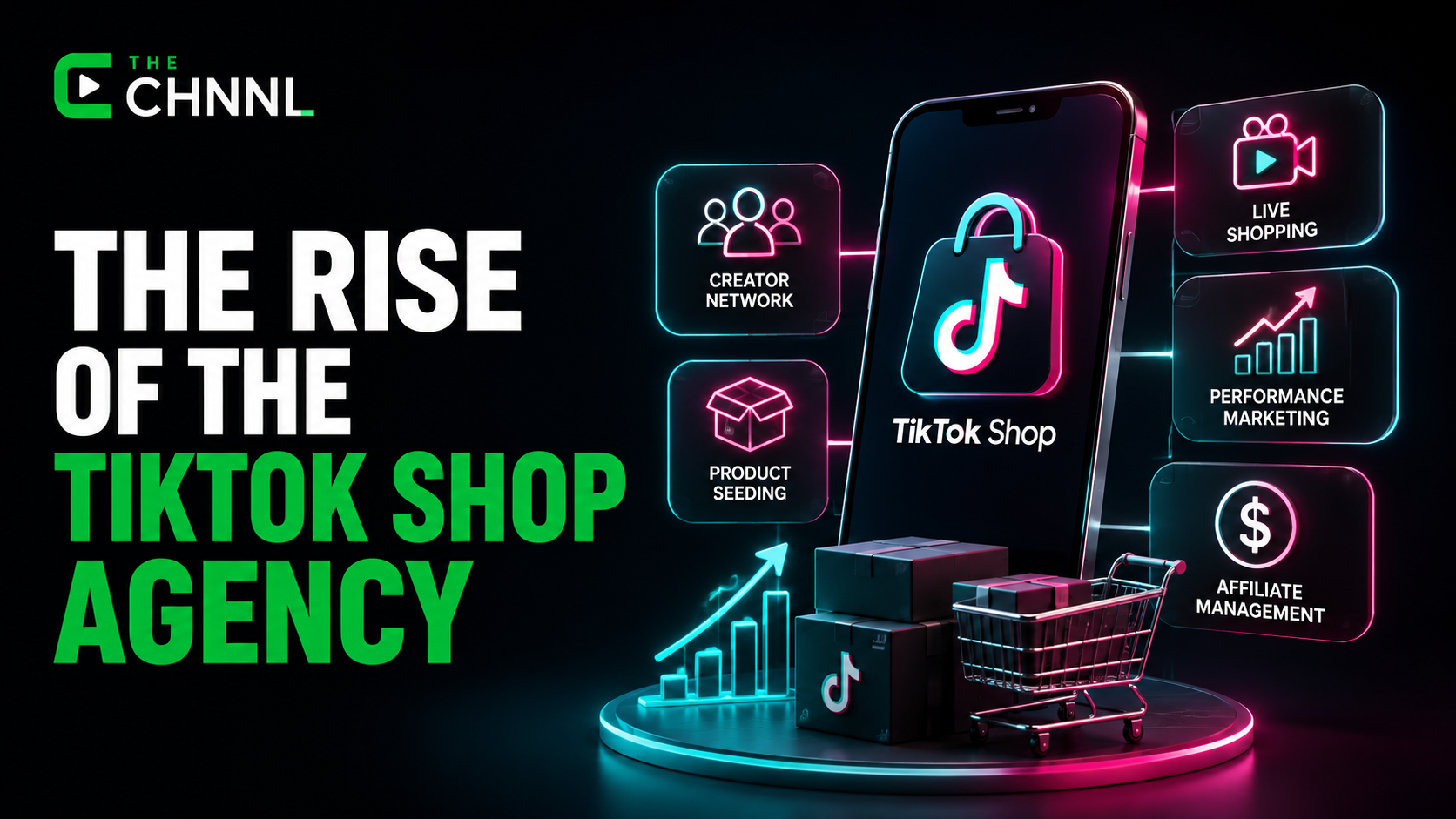
The rise of the TikTok Shop agency
TikTok Shop is creating a new agency model: part influencer network, part ecommerce operator, part LIVE studio and part performance marketing company.
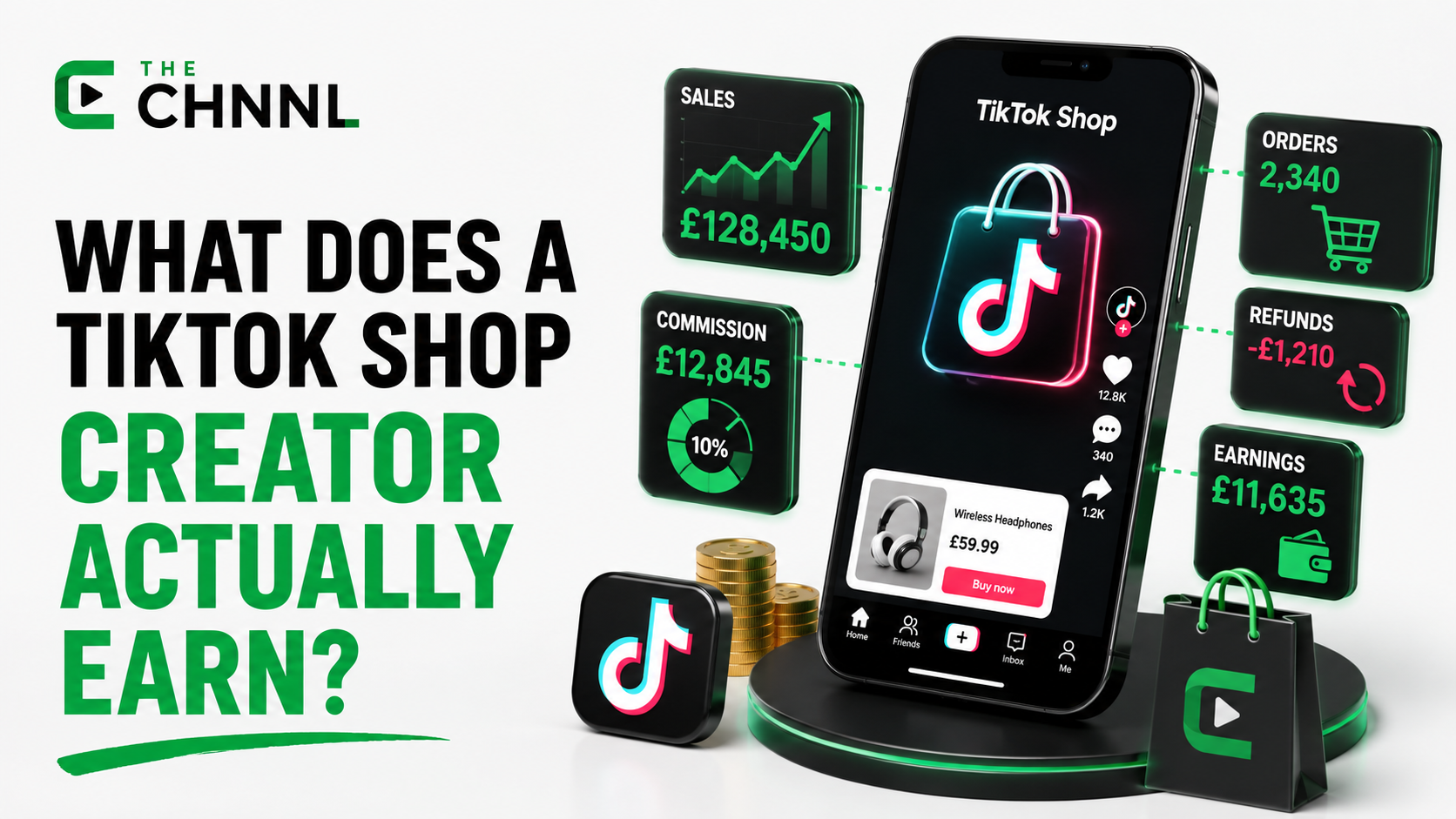
What does a TikTok Shop creator actually earn?
TikTok Shop can generate serious creator income, but GMV, commission and actual earnings are three very different numbers.