
Why brands are starting to treat creators as sales channels
Creators are moving closer to the transaction, giving brands something more powerful than attention alone: a new way to sell products.
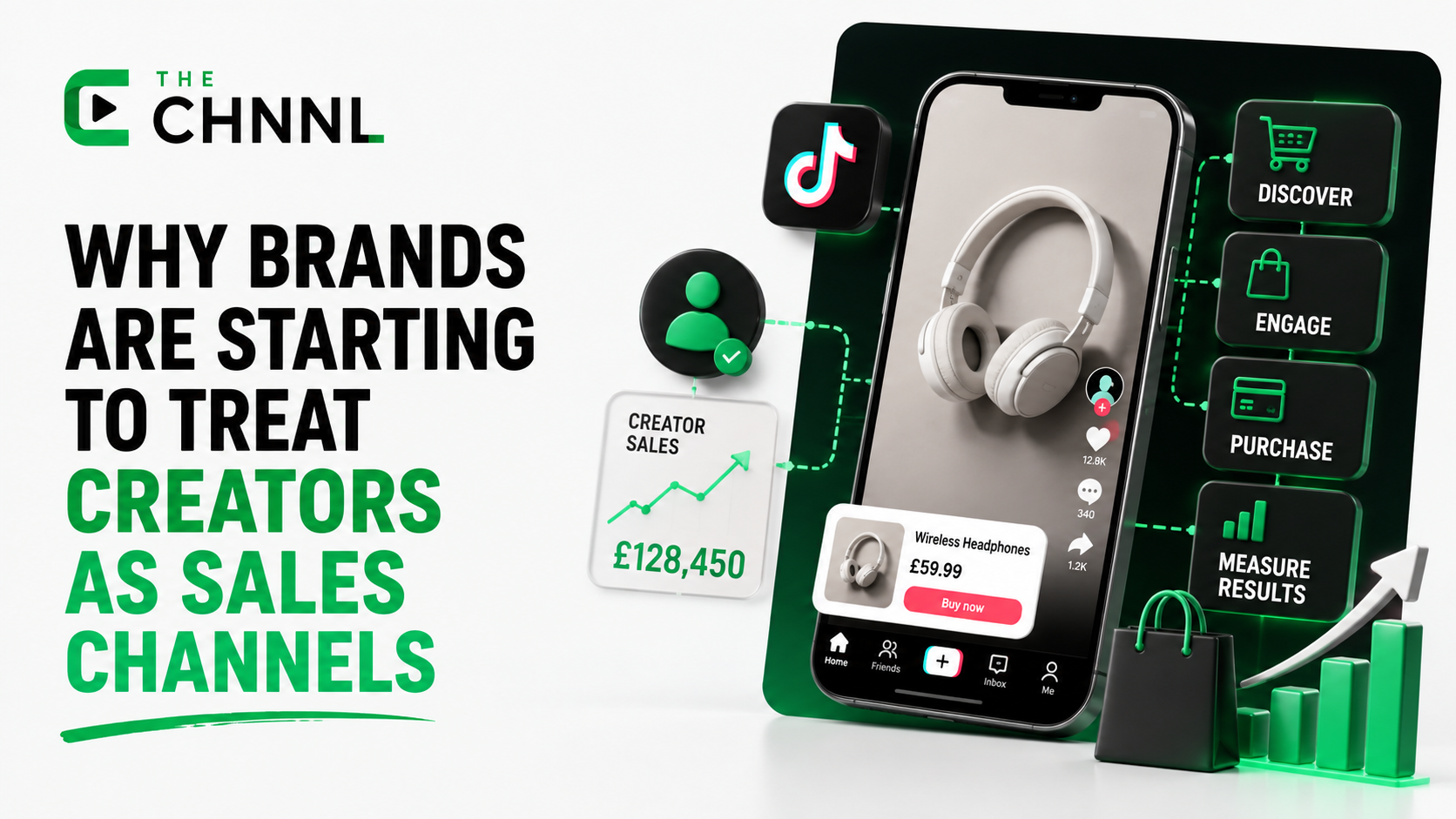
For much of the history of influencer marketing, creators have occupied a fairly specific position inside the marketing funnel: brands paid them to generate awareness, introduce products to audiences, create cultural relevance and, ideally, influence somebody enough that they eventually remembered the company when it was time to buy.
The creator created the attention.
Someone else handled the transaction.
That distinction is becoming much harder to maintain.
TikTok Shop, affiliate commerce, shoppable video, LIVE shopping and increasingly sophisticated attribution systems are allowing brands to connect individual creators much more directly with actual purchases, which means the person making the video can increasingly be measured not simply by how many people watched their content, but by how much commercial activity happened because they watched it.
For brands, that changes the role of the creator considerably.
A creator can still be a media channel.
They can still be a storyteller.
They can still build awareness.
But increasingly, they can also become a sales channel.
The old influencer model was difficult to connect directly with sales
Influencer marketing has always faced an attribution problem.
A brand could pay a creator to introduce a product to 500,000 followers and measure how many people watched, liked, commented or clicked, but understanding precisely how much revenue that particular piece of content ultimately generated was considerably more difficult.
Someone might see an Instagram post on Monday.
Search for the product on Google on Wednesday.
Visit a physical shop on Saturday.
Buy it.
The creator may have caused the purchase, but the connection between influence and transaction could easily disappear.
That made influencer marketing naturally attractive as an awareness channel.
Brands could evaluate reach, engagement and brand lift without necessarily expecting every campaign to demonstrate an immediate return through sales.
Social commerce is shortening that journey.
A consumer can now discover a product in a creator's TikTok, tap the product, purchase it and continue scrolling without leaving the platform.
The distance between recommendation and transaction can sometimes be measured in seconds.
TikTok Shop has made creator sales impossible to ignore
TikTok Shop is perhaps the clearest example of this transition because creators sit directly inside its ecommerce model.
Brands can make products available through affiliate programmes, creators can choose which products they want to promote, and commissions can be tied directly to purchases generated through their content.
TikTok's UK operation offers a useful indication of the scale social commerce is reaching.
The company said in August that TikTok Shop LIVE activity in the UK had increased 55% year on year, with more than 6,000 LIVE shopping sessions taking place every day, while businesses ranging from established retailers to smaller ecommerce companies increasingly use creators and LIVE hosts as part of their selling infrastructure.
Elsewhere, the model is expanding rapidly.
TikTok said creator participation in its Shop affiliate programme in Ireland increased 600% following launch, with more than €2 million in commissions paid to Irish creators by May 2026.
Those commissions exist because transactions exist.
And that creates a very different commercial conversation between a creator and a brand.
GMV is becoming a creator metric
The traditional creator media kit might contain numbers such as:
Followers.
Average views.
Engagement rate.
Audience demographics.
Previous brand partnerships.
The commerce creator can increasingly add another number.
GMV.
Essentially the value of products sold through a creator's activity gives brands something they have wanted from influencer marketing for years: evidence that a particular person can generate transactions.
A creator who can demonstrate that their content repeatedly generates £50,000, £100,000 or £500,000 in product sales is no longer approaching a company solely with a promise that their audience will see the brand.
They are approaching with a commercial track record.
That can fundamentally change how their value is understood.
The creator starts looking less like advertising inventory and more like a retailer, affiliate partner or salesperson with their own distribution.
A small creator can potentially become a big sales channel
This is particularly important because sales performance does not necessarily correlate perfectly with follower count.
A creator with millions of followers may have enormous cultural influence while generating relatively modest direct purchases for a particular product.
Another creator with 30,000 followers might have built an extremely specific audience that trusts their recommendations and purchases regularly.
Which creator is more valuable?
It depends entirely on what the brand wants.
For a global awareness campaign, the first creator may be considerably more useful.
For a performance driven campaign where the objective is moving units, the second creator could potentially win.
This is one reason brands are becoming increasingly interested in micro and nano creators.
EMARKETER estimates that micro and nano influencers will account for 45.5% of influencer marketing spending in 2026, reflecting a wider movement towards creator portfolios that prioritise relevance and performance alongside raw reach.
When the objective becomes sales rather than fame, the definition of an important creator changes.
Brands can build creator salesforces at enormous scale
This also introduces a very different way of thinking about influencer strategy.
Instead of paying five large creators £20,000 each to participate in a campaign, a brand could potentially activate hundreds or thousands of affiliate creators and compensate them primarily when they generate sales.
Not every creator will perform.
Some might produce no sales whatsoever.
Others may generate a handful.
But a small percentage could produce videos that travel far beyond their existing audiences and generate significant transactions.
That resembles the economics of a distributed salesforce.
Except the salespeople are also the advertising creatives.
Each creator interprets the product differently.
One produces a demonstration.
Another tells a story.
Another compares it with a competitor.
Another uses humour.
Another answers common customer questions.
Another sells it during a two hour LIVE.
The brand effectively receives hundreds of different attempts at discovering the message capable of making consumers buy.
Creator content can become the advertising creative too
The commercial value becomes even more interesting when successful organic content is combined with paid media.
A brand can allow creators to produce large volumes of content, observe which videos generate engagement or purchases, and then put advertising spend behind the strongest performers.
This reverses part of the conventional advertising process.
Historically, brands might spend significant amounts of money developing advertising creative before buying the media required to distribute it.
Creator commerce can allow the market to help identify the creative first.
A creator publishes something.
People watch.
Some purchase.
The brand sees that it works.
Then the brand scales it.
YouTube is now explicitly experimenting with this relationship between affiliate creators and advertising.
The company is running a programme that can pay eligible creators an additional $500 when qualifying affiliate content is boosted by participating brands or sellers, meaning the same creator video can potentially generate affiliate commission and then become paid advertising when a company decides it deserves wider distribution.
The creator is simultaneously the publisher, affiliate and advertising creative.
YouTube is building towards the same model
TikTok is not alone in recognising the commercial opportunity.
YouTube has been steadily expanding its Shopping Affiliate Program and recently added Amazon in the United States, allowing eligible creators to tag Amazon products directly inside Shorts, long form videos and livestreams.
The early data is particularly interesting.
YouTube says testing found videos using Shopping product tags generated more than 110% more product clicks than description links alone.
YouTube Shopping has also expanded into the UK, where eligible creators can tag products from participating retailers including Boots, Currys, M&S, Etsy, Debenhams and Wayfair and earn commission when purchases result.
The strategic direction is similar.
YouTube does not want creator recommendations to end with somebody saying:
“Link in the description.”
It increasingly wants the transaction connected directly to the content.
Brands are getting access to a new type of distribution
This is why the term sales channel becomes useful.
Businesses already understand sales channels.
Amazon is a sales channel.
A retailer is a sales channel.
A company's website is a sales channel.
An affiliate network can be a sales channel.
TikTok Shop increasingly allows creators to operate in much the same way.
Imagine a skincare company generating £5 million annually through its own website, £3 million through Amazon, £2 million through physical retailers and another £2 million through hundreds of TikTok Shop affiliates.
At that point, creator commerce is not simply part of the company's marketing strategy.
It is part of its distribution strategy.
That distinction matters because distribution budgets and marketing budgets can be thought about very differently.
The creator is no longer solely helping consumers discover demand.
They are helping fulfil it.
This changes what brands should look for in creators
Once creators are treated as potential sales channels, discovery changes too.
Brands need to understand more than audience size.
Does the creator understand the product category?
Do people trust their recommendations?
Can they explain products clearly?
Can they demonstrate them effectively?
Do their viewers ask buying questions?
What is their conversion rate?
What is their average order value?
Which products have they sold successfully before?
Do they perform better through short form video or LIVE?
How much GMV have they generated?
How consistently do they produce commercially effective content?
Those questions resemble the evaluation of a retail or affiliate partner far more than the evaluation of a celebrity endorsement.
And they create an entirely new layer of creator intelligence for agencies and brands to understand.
Creators may become more valuable because their results are measurable
There is an important creator-side consequence to all of this.
Performance measurement is sometimes discussed as though it exists primarily to help brands spend less money.
It can also help exceptional creators demonstrate that they deserve considerably more.
A creator might look relatively ordinary on paper.
Perhaps they have 40,000 followers.
Their videos average 15,000 views.
They are not famous.
But suppose they can demonstrate that their content generated £300,000 in product sales during the previous six months.
Suddenly the follower count becomes considerably less interesting.
That creator has evidence of economic influence.
And evidence can strengthen negotiating power.
They may deserve higher commissions.
Brands may want exclusivity.
Competitors may want access to them.
Agencies may want to represent them.
Companies may want to turn their content into advertisements.
Eventually, they might decide that instead of selling somebody else's products, they should launch one of their own.
That is how sales performance can become a pathway towards creator entrepreneurship.
Brands need to be careful not to reduce creators to conversion machines
There is a danger in taking this logic too far.
Not every piece of creator content should sell something.
Not every creator should be evaluated according to immediate revenue.
And not every valuable creator relationship can be understood through a conversion dashboard.
Creators can shape perception months before somebody purchases.
They can introduce companies to entirely new communities.
They can make brands culturally relevant.
They can generate trust that conventional advertising struggles to reproduce.
They can influence offline purchases that attribution systems never capture.
A creator who generates enormous awareness but relatively few directly attributable transactions can still be extraordinarily valuable.
The strongest brands will therefore understand that creator as media channel and creator as sales channel are not competing ideas.
They are different jobs.
Sometimes the objective is attention.
Sometimes it is credibility.
Sometimes it is culture.
Sometimes it is conversion.
The mistake is assuming every creator should perform all four.
The creator economy is moving closer to the transaction
The larger trend is difficult to miss.
Affiliate platforms are raising substantial amounts of money.
TikTok Shop continues expanding.
YouTube is embedding products directly into content.
LIVE shopping is growing.
Creator agencies are building commerce divisions.
Brands are recruiting enormous affiliate networks.
And creators themselves are becoming increasingly comfortable discussing sales, commissions, GMV and conversion alongside followers and views.
The economic role of the creator is expanding.
They began as people who attracted audiences.
Then brands paid them to borrow those audiences.
Now platforms are giving creators the infrastructure required to turn those audiences and increasingly algorithmically distributed content directly into transactions.
That creates a much more commercially powerful proposition.
Because when a creator can repeatedly make people discover, trust and purchase a product, the brand is no longer simply buying influence.
It has found another way to sell.
And that is why creators are increasingly starting to look less like a line in the marketing budget and more like something businesses have understood for generations:
A sales channel.
Related stories
TikTok Shop is changing what it means to be a creator
TikTok Shop is turning creators from attention generators into participants in the transaction itself and changing what commercial influence looks like.
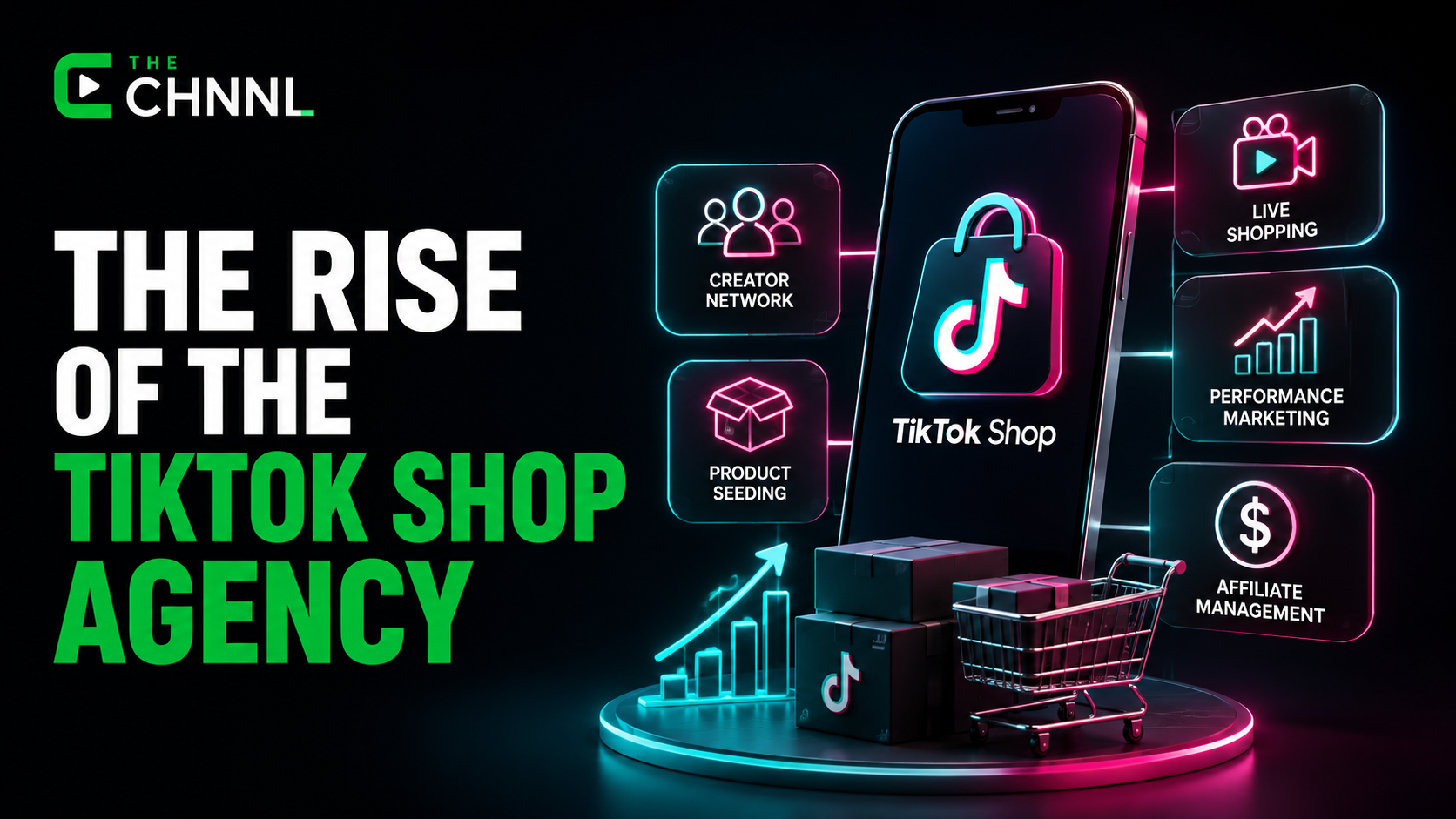
The rise of the TikTok Shop agency
TikTok Shop is creating a new agency model: part influencer network, part ecommerce operator, part LIVE studio and part performance marketing company.
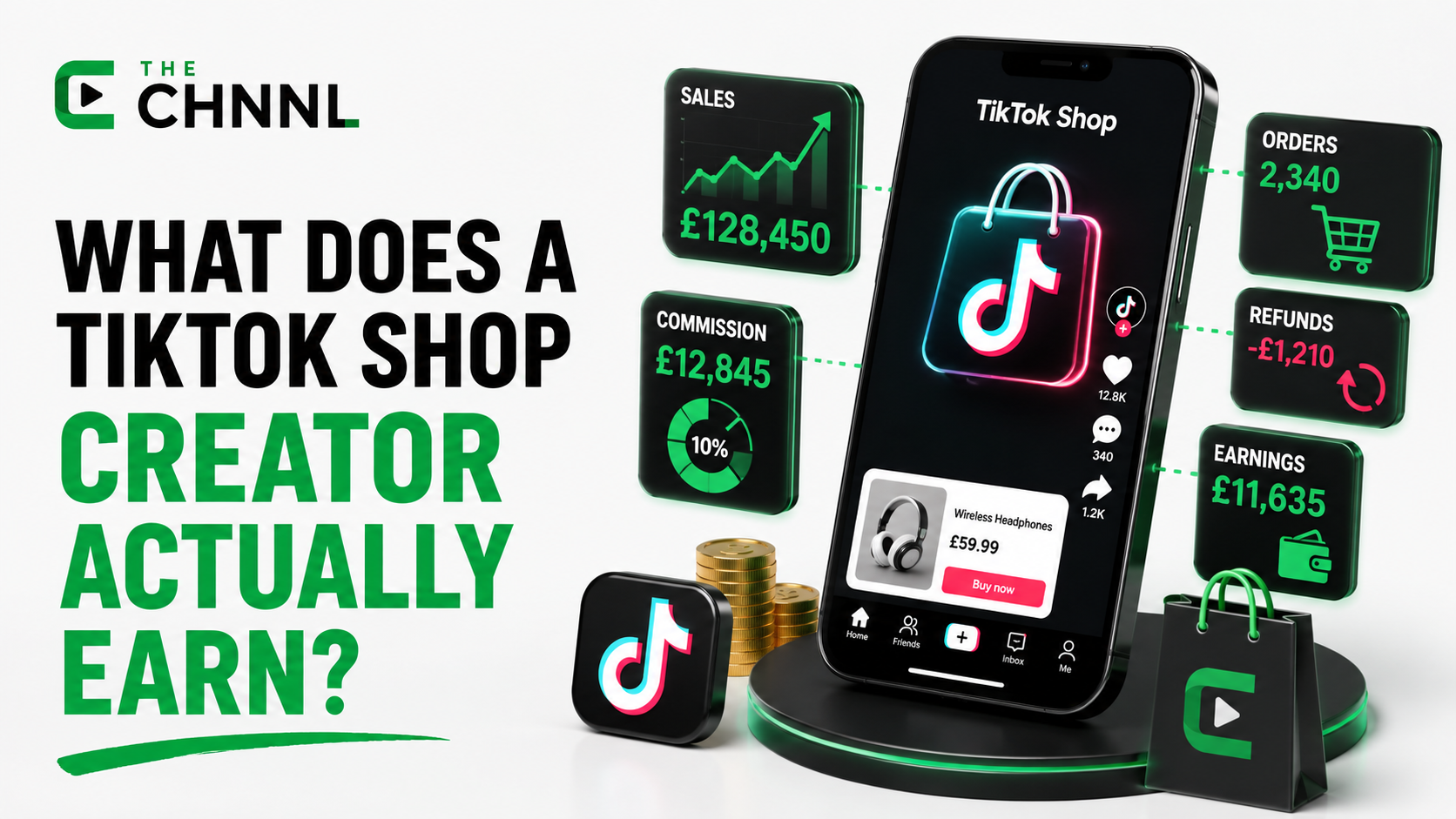
What does a TikTok Shop creator actually earn?
TikTok Shop can generate serious creator income, but GMV, commission and actual earnings are three very different numbers.