
The rise of the TikTok Shop agency
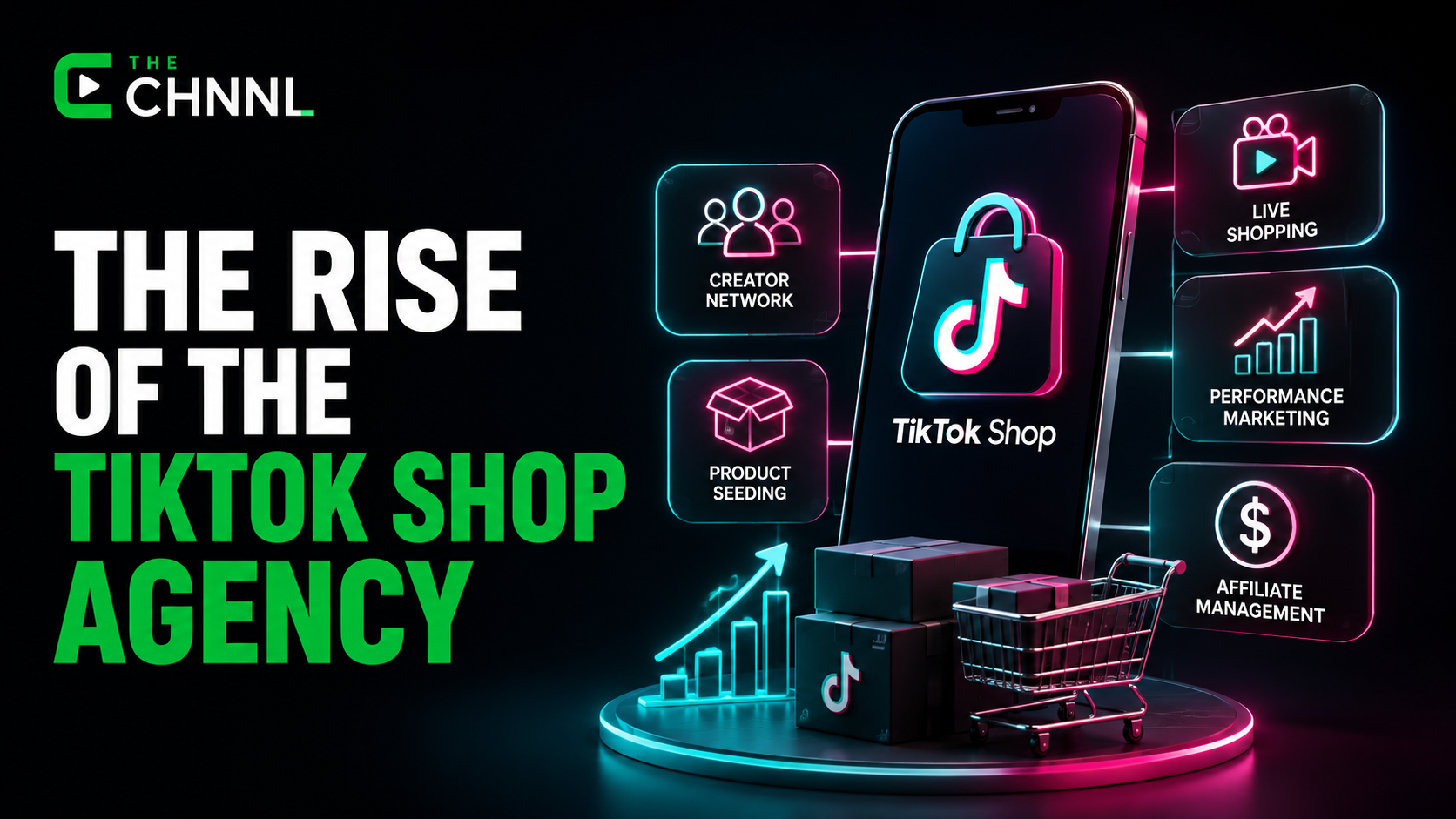
TikTok Shop is creating a new agency model: part influencer network, part ecommerce operator, part LIVE studio and part performance marketing company.
For years, the influencer marketing agency had a relatively straightforward job: find creators, connect them with brands, negotiate campaigns, manage content and help companies turn social media attention into awareness.
TikTok Shop is creating demand for something different.
A new generation of agencies is being built around the mechanics of social commerce itself, helping brands recruit hundreds or thousands of affiliates, seed products to creators, operate LIVE shopping studios, manage commissions, produce shoppable content, run paid advertising behind successful creator videos and, ultimately, increase the amount of merchandise sold through TikTok.
These businesses may still work with influencers.
But describing them simply as influencer agencies misses what they are becoming.
They are increasingly part talent network, part ecommerce operator, part performance marketing company, part content studio and part sales organisation.
And as TikTok Shop grows, the TikTok Shop agency is emerging as a distinct business category around it.
TikTok Shop needs an entirely different agency model
Traditional influencer marketing usually revolves around campaigns.
A company wants to launch something.
The agency identifies appropriate creators.
Deals are negotiated.
Creators produce content.
The campaign runs.
Results are reported.
TikTok Shop can operate continuously.
Products remain available for creators to promote, affiliate commissions provide ongoing incentives, successful videos can continue generating purchases after publication, LIVE shopping can take place every day and brands can keep recruiting new affiliates as they attempt to increase sales.
That changes the role of the agency.
The job is no longer necessarily:
Find us five influencers for our campaign.
It can become:
Build and operate our creator commerce engine.
That is a considerably larger proposition.
Creator recruitment can happen at enormous scale
One of the defining characteristics of TikTok Shop is the number of creators a brand can potentially work with.
Traditional influencer marketing has often been constrained by the operational burden of negotiating individual relationships.
If a company wants to work with 10 creators, that is manageable.
If it wants to work with 1,000 affiliates simultaneously, the problem becomes completely different.
Some TikTok Shop agencies are being built specifically to solve this.
US based social commerce company SuperOrdinary, for example, operates across creator commerce, LIVE shopping and TikTok Shop and has developed infrastructure around connecting brands with large networks of creators, while companies such as The Social Shop and other specialist TikTok Shop partners similarly position creator affiliate management as a core part of their commerce offering.
The agency's value therefore increasingly comes from its ability to build a network, not simply maintain a contact book of famous influencers.
That network can contain thousands of smaller creators who may individually generate modest sales but collectively become an enormous distribution channel.
Product seeding is becoming infrastructure
This creates another operational challenge.
Creators need products.
If hundreds of affiliates are potentially producing videos around a brand, somebody needs to decide which creators should receive samples, distribute those products, track whether content is actually produced and determine which relationships are worth continuing.
Product seeding has existed in PR and influencer marketing for years, but TikTok Shop turns it into something much closer to performance infrastructure.
A company might send hundreds of units into the creator ecosystem knowing that many recipients will generate little or nothing.
But one creator could produce the video that sells thousands.
The agency's job becomes finding that creator efficiently enough for the economics to work.
That requires data.
Who requested the product?
Who received it?
Who posted?
How many videos did they create?
How many views did those videos receive?
How much GMV did they generate?
What was the conversion rate?
Should the creator receive another product?
Should the brand increase their commission?
Should their content receive paid advertising support?
The TikTok Shop agency therefore begins operating less like a conventional communications business and more like a performance operation.
The creator with the most followers may not be the most important creator
This also changes creator discovery.
An influencer agency might traditionally become excited when a creator with two million followers agrees to participate in a campaign.
A TikTok Shop agency might become equally excited about somebody with 15,000 followers who repeatedly sells hundreds of units.
The difference is attribution.
When creator content is connected directly with transactions, agencies can evaluate talent according to commercial performance rather than relying primarily on audience proxies such as followers and engagement.
That creates a new kind of creator database.
Instead of simply asking:
Who has the largest audience?
Agencies can ask:
Who sells skincare?
Who converts home products?
Who performs particularly well during LIVE broadcasts?
Who can sell high ticket products?
Who consistently produces videos brands can amplify?
Those become valuable pieces of intelligence.
And an agency that understands which creators actually move products can build a meaningful competitive advantage.
LIVE shopping creates another agency business entirely
Then there is LIVE.
TikTok said in August that the amount of TikTok Shop LIVE activity in the UK had grown 55% year on year, with more than 6,000 LIVE shopping sessions taking place every day.
Running a successful LIVE commerce operation requires considerably more than asking an influencer to switch on their phone.
There are hosts.
Products.
Offers.
Scripts.
Sets.
Lighting.
Moderation.
Inventory.
Scheduling.
Production.
Analytics.
Promotions.
And potentially several hours of broadcasting every day.
That is why specialist agencies and social commerce companies are increasingly building physical LIVE studios where brands can operate regular shopping broadcasts with professional hosts and production teams.
The agency can effectively become a television shopping production company built for the social media era.
Except unlike traditional television shopping, the audience can comment, ask questions, interact with hosts and purchase directly through the same platform.
A new profession is emerging around LIVE commerce
This infrastructure is also creating a different category of creator.
The professional LIVE shopping host.
TikTok itself is investing in the development of this workforce.
In Singapore, the company has introduced a LIVE Host Academy designed specifically to train professional hosts, alongside an Affiliate Accelerator focused on helping creators develop sustainable commerce businesses.
That matters to agencies because talent recruitment can extend beyond conventional influencers.
Someone might have no meaningful social media following whatsoever but possess exceptional presenting and selling ability.
An agency can potentially put that person in front of an established brand's TikTok Shop audience and build a professional role around them.
In that scenario, the creator does not bring the distribution.
The brand and platform provide it.
The creator brings the skill.
Successful creator content can become advertising
Another important part of the agency model sits between organic creator content and paid media.
Suppose a brand sends a product to 500 creators.
Hundreds produce content.
Most videos perform modestly.
Twenty perform particularly well.
Three generate exceptional sales.
Instead of attempting to predict which creators will produce the winning advertisement before spending heavily, the brand can allow the creator ecosystem to produce and test enormous amounts of content organically before putting additional advertising money behind the winners.
That creates an extremely powerful performance marketing loop.
Recruit creators → distribute products → generate content → measure sales → identify winners → amplify winning content → generate more sales.
The agency can operate the entire system.
This is one reason the boundary between influencer agency and performance marketing agency is becoming increasingly difficult to see.
The creator is producing the advertising creative.
The audience is testing it.
Commerce data reveals whether it works.
Paid media scales the winner.
Agencies can make money in several different ways
This also makes TikTok Shop commercially interesting from the agency's perspective because there are multiple potential revenue streams.
An agency might charge a monthly management fee for operating a brand's TikTok Shop.
It might take a percentage of GMV.
It could charge for LIVE production.
It could provide paid media management.
It could operate creator affiliate programmes.
It could provide content production.
It could manage product seeding.
It might represent creators themselves.
Or it could combine several of these services into one relationship.
Performance based compensation is particularly interesting because it aligns the agency much more closely with the commercial outcome.
Instead of being paid £20,000 to deliver a campaign regardless of how many products ultimately sell, an agency participating in GMV has a direct financial incentive to improve the entire commerce operation.
The upside can theoretically become much larger.
So can the risk.
TikTok is helping create the ecosystem around itself
TikTok has good reason to encourage this agency layer.
Most businesses cannot become experts in social commerce overnight.
A cosmetics company may understand cosmetics extremely well but know very little about recruiting TikTok affiliates.
A food brand may understand retail distribution but have no idea how to run six hours of LIVE shopping every day.
A small ecommerce company may not have enough employees to manage hundreds of creator relationships.
Specialist partners solve those problems.
TikTok consequently operates its official TikTok Shop Partner ecosystem, through which approved agencies and service providers can support sellers and creators with areas including operations, content and ecommerce growth.
That ecosystem is strategically important.
The easier agencies make TikTok Shop for brands, the easier it becomes for more brands to participate.
More brands create more products for creators.
More creators produce more shoppable content.
More content generates more transactions.
More transactions make TikTok Shop more attractive to sellers.
The agency becomes part of the flywheel.
Traditional influencer agencies will have to decide how far they follow
This creates an interesting strategic decision for established creator agencies.
They already possess something TikTok Shop businesses desperately need:
Creator relationships.
But creator relationships alone may not be enough.
Managing TikTok Shop effectively can require knowledge of ecommerce operations, affiliate economics, logistics, paid media, LIVE production, conversion optimisation and performance analytics.
Those capabilities sit outside the traditional influencer agency skill set.
Some established agencies will build them.
Some will acquire specialist businesses.
Some will partner with ecommerce companies.
And some may deliberately remain focused on high value brand partnerships rather than entering a performance driven market.
There is room for both.
But the commercial centre of gravity inside creator marketing is becoming harder to ignore.
The agency could eventually become the creator commerce operating system
The most interesting TikTok Shop agencies may ultimately be the ones that stop thinking of themselves as campaign businesses altogether.
Imagine an agency managing 50 brands.
Across those brands it has relationships with tens of thousands of creators.
It knows which creators sell particular categories.
It operates several LIVE studios.
It employs professional hosts.
It manages product sampling.
It produces content.
It controls advertising budgets.
It has years of conversion data.
And its technology can identify which creator, product, commission level and piece of content is most likely to generate a transaction.
That is no longer simply an influencer agency.
It starts resembling infrastructure for an entirely new retail channel.
And the larger TikTok Shop becomes, the more valuable that infrastructure potentially becomes.
The rise of the TikTok Shop agency is really the rise of creator commerce
TikTok Shop agencies are appearing because the economic role of creators themselves is changing.
When creators primarily generated awareness, brands needed influencer marketing agencies.
When creators begin generating transactions at scale, brands need creator-commerce operators.
That distinction explains why this category is worth watching.
The companies that become important may not necessarily be the agencies representing the biggest TikTok stars.
They could be the businesses quietly building networks of thousands of commercially effective creators, operating LIVE studios around the clock and learning which combinations of products, people and content actually make consumers buy.
TikTok Shop has already changed the relationship between entertainment and ecommerce.
Now it is beginning to reshape the businesses surrounding creators as well.
And the TikTok Shop agency could become one of the most important new middlemen in the creator economy.
Because somebody has to turn millions of pieces of creator content into a functioning commerce machine.
Increasingly, that is becoming an industry of its own.
Related stories
TikTok Shop is changing what it means to be a creator
TikTok Shop is turning creators from attention generators into participants in the transaction itself and changing what commercial influence looks like.
Why brands are starting to treat creators as sales channels
Creators are moving closer to the transaction, giving brands something more powerful than attention alone: a new way to sell products.
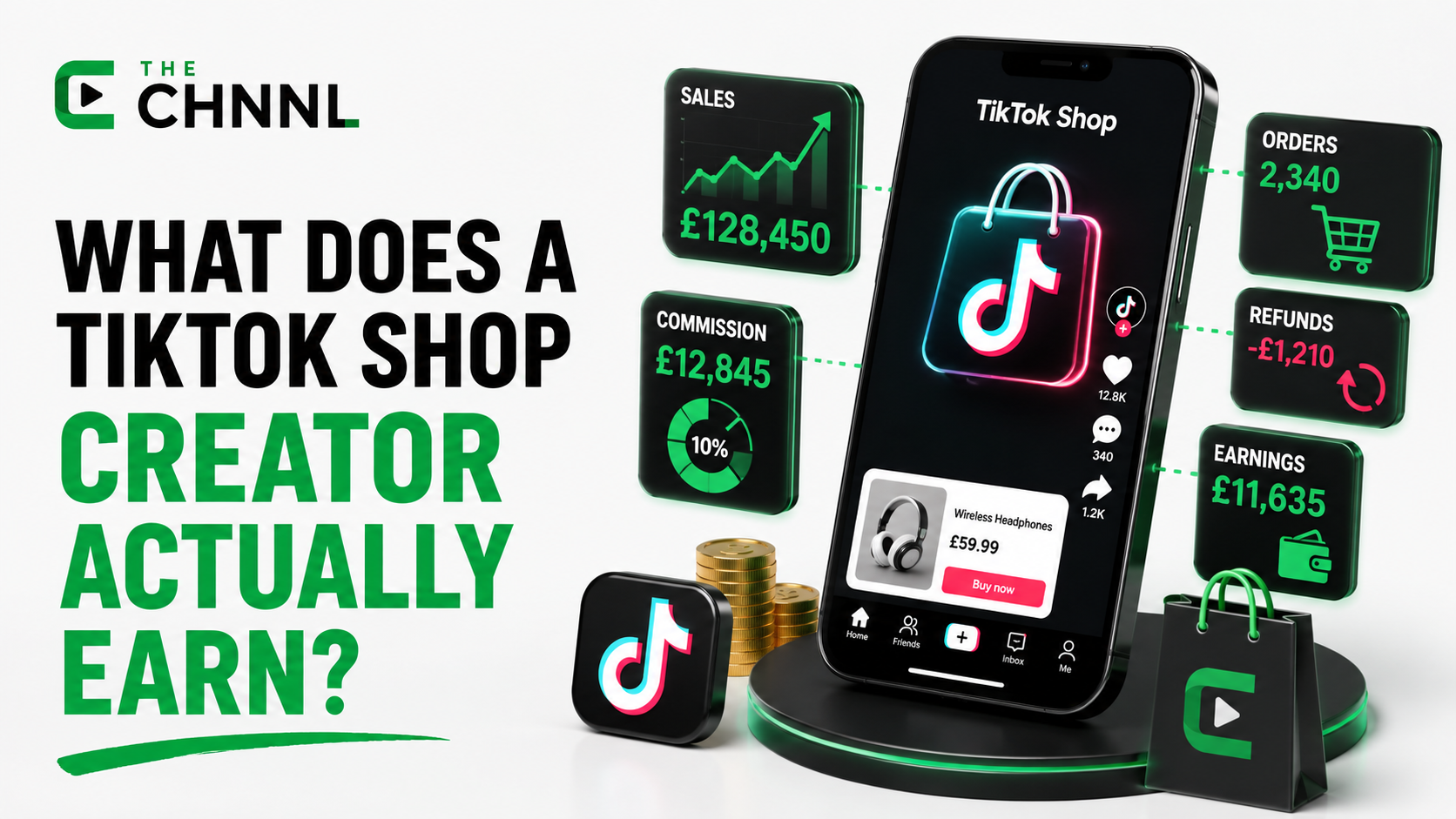
What does a TikTok Shop creator actually earn?
TikTok Shop can generate serious creator income, but GMV, commission and actual earnings are three very different numbers.