
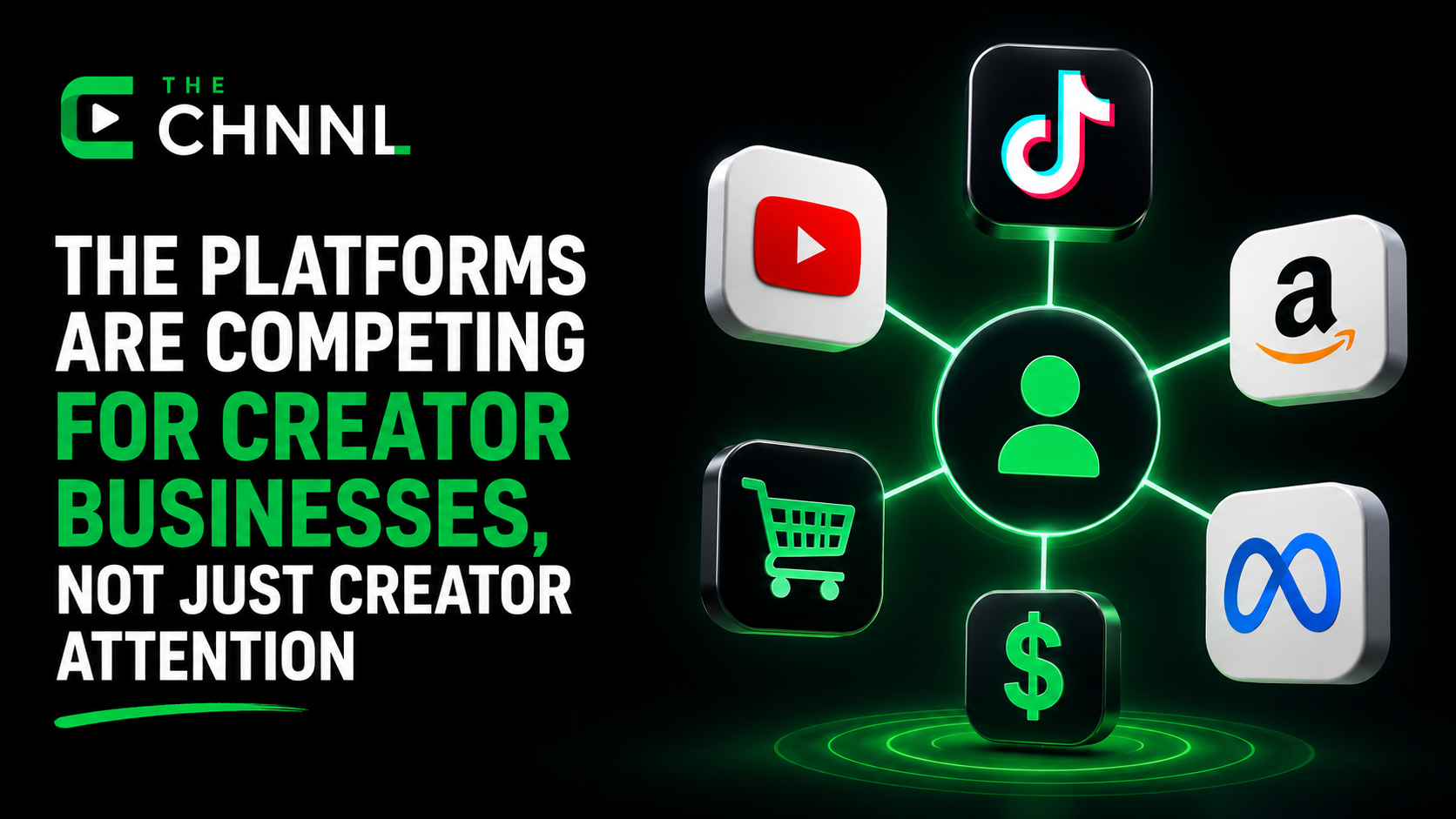
The platforms are competing for creator businesses, not just creator attention
Platforms once competed for creator attention. Increasingly, they are competing to become the infrastructure underneath entire creator businesses.
For most of the social media era, the competition between platforms could be understood relatively simply: TikTok, YouTube, Instagram and everyone around them wanted creators because creators produced the videos, photographs, livestreams and conversations that kept audiences scrolling, and the more compelling creators a platform could attract, the more attention it could capture and eventually sell to advertisers.
That competition has not disappeared.
But something more commercially important is beginning to sit on top of it.
Platforms increasingly do not just want creators to post with them.
They want creators to build businesses with them.
The difference matters because a creator choosing where to upload their next video can change that decision tomorrow, whereas a creator who earns commissions, operates a storefront, manages brand relationships, sells products, runs livestream commerce and potentially builds an entire consumer company using a platform's infrastructure becomes much more deeply connected to that ecosystem.
Recent developments from Amazon, YouTube, TikTok and Meta increasingly point towards the same conclusion.
The next platform battle is not simply about where creators get the most views. It is about where creators believe they can build the best businesses.
Amazon wants to help creators become ecommerce founders
One of the clearest examples arrived in August with Amazon Creators Foundry, a programme created by Creators HQ in partnership with Amazon Ads that is explicitly designed to help creators turn existing products and audiences into global ecommerce businesses.
Twenty selected creators will receive support including dedicated account management, custom Amazon storefronts, onboarding assistance, advertising support, Amazon Ads training and help establishing their operations on Amazon.ae, while the programme advertises substantial media incentives that include a 50% bonus media contribution of up to $100,000 per creator alongside $10,000 in Sponsored Ads incentives.
The language surrounding the programme is particularly revealing.
Amazon Creators Foundry is not positioning the participant simply as an influencer who can help Amazon sell somebody else's products.
It describes the opportunity as going from creator to “successful e-commerce business owner.”
That is a fundamentally different relationship.
Amazon is effectively telling creators that if they already have a product, brand and audience, its enormous ecommerce infrastructure can provide the next layer required to turn those assets into a more sophisticated company.
That includes storefronts.
Advertising.
Fulfilment.
International ecommerce.
Business support.
And access to the machinery Amazon has spent decades building for conventional sellers.
The creator is no longer simply a marketing channel within that system.
They can become the merchant.
YouTube is turning videos into retail infrastructure
YouTube is approaching the same opportunity from a different direction.
On August 27, YouTube announced that Amazon had joined the YouTube Shopping Affiliate Program in the United States, meaning eligible creators can now tag Amazon products directly inside Shorts, conventional videos and livestreams and receive commissions when purchases result from their recommendations.
That might sound like another affiliate integration, but the significance becomes clearer when considered alongside the wider development of YouTube Shopping.
YouTube has been progressively removing the distance between watching something and buying something.
Instead of a creator mentioning a product, telling viewers to find a link in the description, sending them somewhere else and hoping the eventual purchase can still be attributed correctly, the product can increasingly become part of the content itself.
YouTube says its testing found videos using Shopping product tags generated more than twice as many product clicks as description links alone.
And this is not solely an American development.
YouTube recently expanded its Shopping Affiliate Program into the UK, allowing eligible creators to tag products from retailers including Currys, Boots, M&S, Etsy, Debenhams and Wayfair inside videos, Shorts and livestreams and earn revenue when viewers purchase from participating retailers.
YouTube therefore becomes more than the place where somebody builds an audience.
It becomes part of the commercial infrastructure through which that audience is monetised.
TikTok has gone even further
If YouTube is adding commerce to an enormous content ecosystem, TikTok has demonstrated what can happen when content and commerce become deeply intertwined.
TikTok Shop allows creators to discover products, request samples, work with brands, create shoppable videos, sell through LIVE broadcasts and receive commissions when their content generates purchases, while sellers can open affiliate opportunities that allow creators to begin promoting products without negotiating conventional influencer campaigns individually.
That changes the route into the creator economy.
Traditionally, somebody might build an audience first and monetise it later.
Build 100,000 followers.
Attract brands.
Negotiate sponsorships.
Get paid to publish content.
TikTok Shop can compress that process because commercial performance itself can become part of the creator's development.
A relatively small creator who understands products, video and selling can begin generating affiliate revenue without first becoming a conventional celebrity influencer.
That is why the rise of social commerce matters far beyond ecommerce.
It creates a new category of creator whose primary commercial asset might not be fame.
It might be the ability to sell.
TikTok itself now describes its proposition to creators in explicitly entrepreneurial language: “Turn your creativity into a career” and “build a creator business on TikTok Shop.”
That language tells us where the competition is heading.
Meta wants a piece of creator commerce too
Meta is moving in the same direction across Facebook and Instagram, particularly in Asia Pacific, where more than 10 million creators connected their Facebook accounts with retail partners including Shopee, Lazada, Flipkart and Myntra during the previous year.
Those creators generated more than $24 million in commissions between June 29 and July 26 alone, according to figures Meta shared in August.
Again, the commercial relationship is different from traditional influencer marketing.
A platform does not necessarily need to convince a brand to pay a creator £20,000 for a campaign before anybody makes money.
Creators can become part of a performance-driven commerce network in which content, distribution, product discovery and transactions increasingly operate together.
And the more effectively Meta can connect those pieces, the stronger the reason for commercially ambitious creators to continue building inside its ecosystem.
The creator relationship is becoming much harder to leave
This is where the strategic value to the platforms becomes particularly interesting.
Attention can be surprisingly portable.
A creator can publish a TikTok today, an Instagram Reel tomorrow and a YouTube Short ten minutes later.
Content can be repurposed.
Audiences can follow creators across platforms.
Trends routinely jump from one network to another.
That makes creator loyalty difficult to manufacture purely through distribution.
Business infrastructure creates a different kind of relationship.
Imagine a creator whose YouTube channel generates advertising revenue, whose videos generate affiliate commissions through YouTube Shopping, whose product recommendations are integrated into years of existing content and whose relationships with merchants increasingly run through that ecosystem.
Or a TikTok creator whose income comes from TikTok Shop, whose products arrive through seller samples, whose commissions are processed through the platform and whose LIVE shopping operation has been built around TikTok's audience.
Or a creator-founder whose product is stored by Amazon, sold through an Amazon storefront, promoted through Amazon advertising and shipped through Fulfilment by Amazon.
Leaving any of those ecosystems becomes more complicated than simply deciding where to upload tomorrow's video.
The platform has moved from hosting the creator's content to participating in the creator's company.
This explains why commerce is becoming so strategically important
There is an enormous economic incentive behind this shift.
Creators influence purchasing decisions, and businesses increasingly want infrastructure capable of converting that influence into measurable transactions.
Affiliate marketing alone is expected to generate more than $240 billion in U.S. ecommerce sales during 2026, according to EMARKETER figures reported by Business Insider, while companies are raising significant amounts of money to build the infrastructure connecting retailers and creators. businessinsider.com
Levanta, for example, has just raised $22 million after building a network of more than 90,000 vetted creators who can promote products sold through Amazon, Walmart and Shopify, with the company helping retailers manage everything from commissions and performance tracking to creator payments and tax administration.
The existence of businesses like Levanta shows how substantial the infrastructure surrounding creator commerce is becoming.
There are platforms.
Affiliate networks.
Creator agencies.
Payment providers.
Retail marketplaces.
Attribution companies.
Creator marketplaces.
Social commerce specialists.
And increasingly the technology platforms themselves are trying to connect more of those pieces.
The economic opportunity is no longer simply selling advertising beside creator content.
It is participating in the commerce that creator content generates.
Creators are becoming less dependent on traditional sponsorships
This also changes the balance of power for creators.
The traditional influencer model creates a dependency on brands choosing you.
A creator builds an audience.
They hope brands notice.
An agency or marketing manager gets in touch.
A fee is negotiated.
Content is delivered.
Payment arrives.
Then the creator waits for another opportunity.
Creator commerce provides additional routes.
A creator can earn affiliate commissions without securing a conventional sponsorship.
They can operate a storefront.
They can launch products.
They can use LIVE shopping.
They can build recurring commercial relationships with audiences.
They can eventually create their own brands.
And, as Amazon Creators Foundry demonstrates, the largest commerce platforms are increasingly willing to help successful creators make that transition.
That does not eliminate traditional brand deals, which will remain an enormous part of the industry, but it does mean sponsorship revenue increasingly sits alongside a much wider collection of creator business models.
The platforms are becoming business operating systems
There is a useful way to think about where all of this could eventually lead.
The most powerful creator platform may not necessarily be the one offering the best video editor, the largest potential audience or even the highest advertising revenue share.
It could become the platform that answers the greatest number of a creator's business needs.
Create here.
Build your audience here.
Find brands here.
Sell products here.
Earn commissions here.
Run livestreams here.
Advertise here.
Launch your own products here.
Build your company here.
Once platforms begin assembling those pieces, they start looking less like social networks and more like operating systems for creator businesses.
And that creates a much more valuable relationship.
The next creator war will be fought over economics
Creators will obviously continue caring about views.
Reach creates opportunity, and no platform can build a successful creator economy if creators believe their content will disappear into an algorithmic void.
But reach increasingly represents only the beginning of the relationship.
The more important question is what happens after the audience arrives.
Can the creator make money?
Can they find customers?
Can they work with brands?
Can they sell somebody else's products?
Can they sell their own?
Can they turn an audience into an asset that exists beyond their next viral video?
Amazon, YouTube, TikTok and Meta are approaching those questions from very different starting positions, but they are increasingly arriving at the same destination.
They want creators generating commerce inside their ecosystems.
Because the platform that owns somebody's attention for 30 seconds has won a video.
The platform that helps somebody build their livelihood has won something considerably more valuable.
It has become part of their business.
Related stories
TikTok Shop is changing what it means to be a creator
TikTok Shop is turning creators from attention generators into participants in the transaction itself and changing what commercial influence looks like.
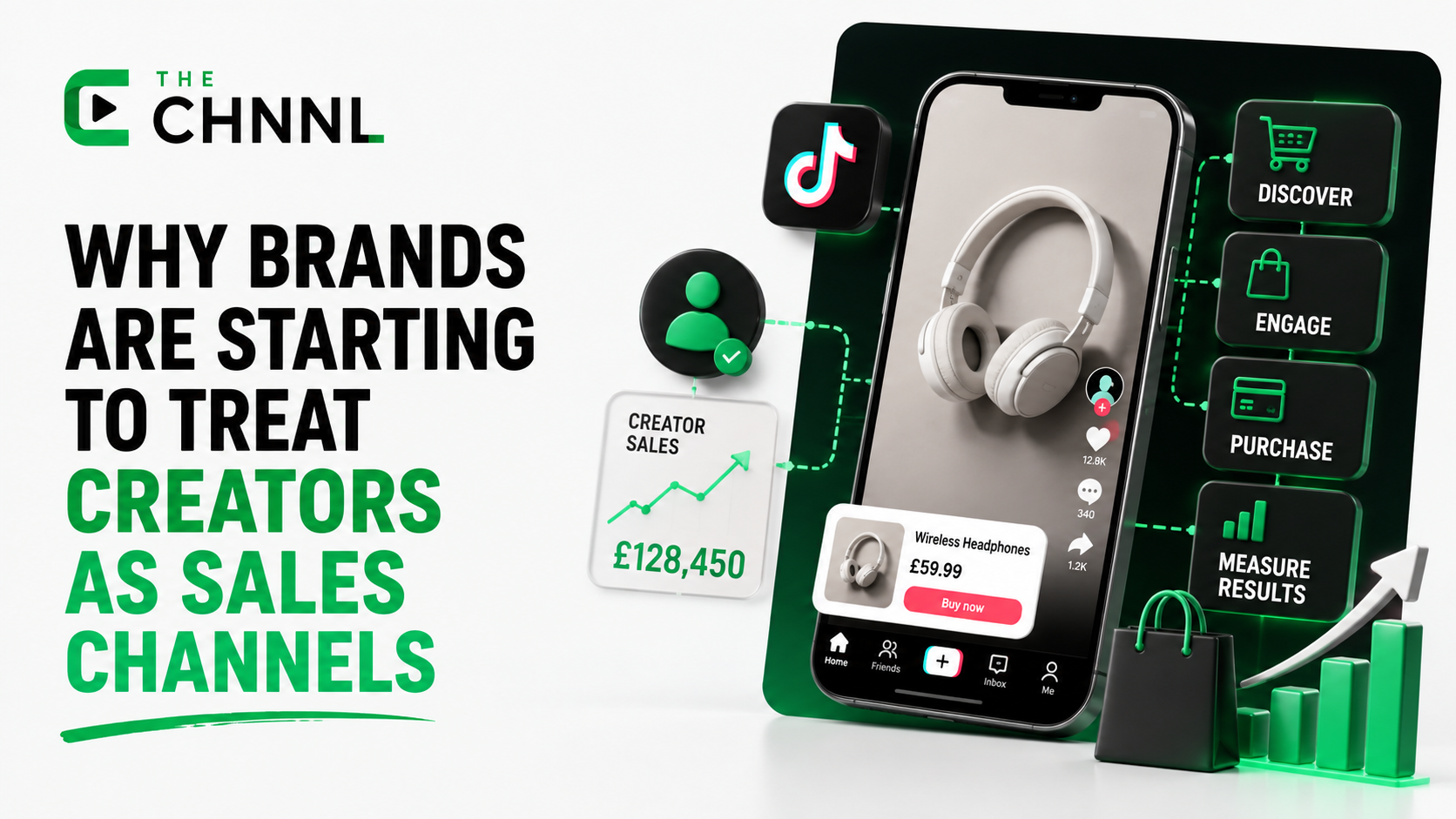
Why brands are starting to treat creators as sales channels
Creators are moving closer to the transaction, giving brands something more powerful than attention alone: a new way to sell products.
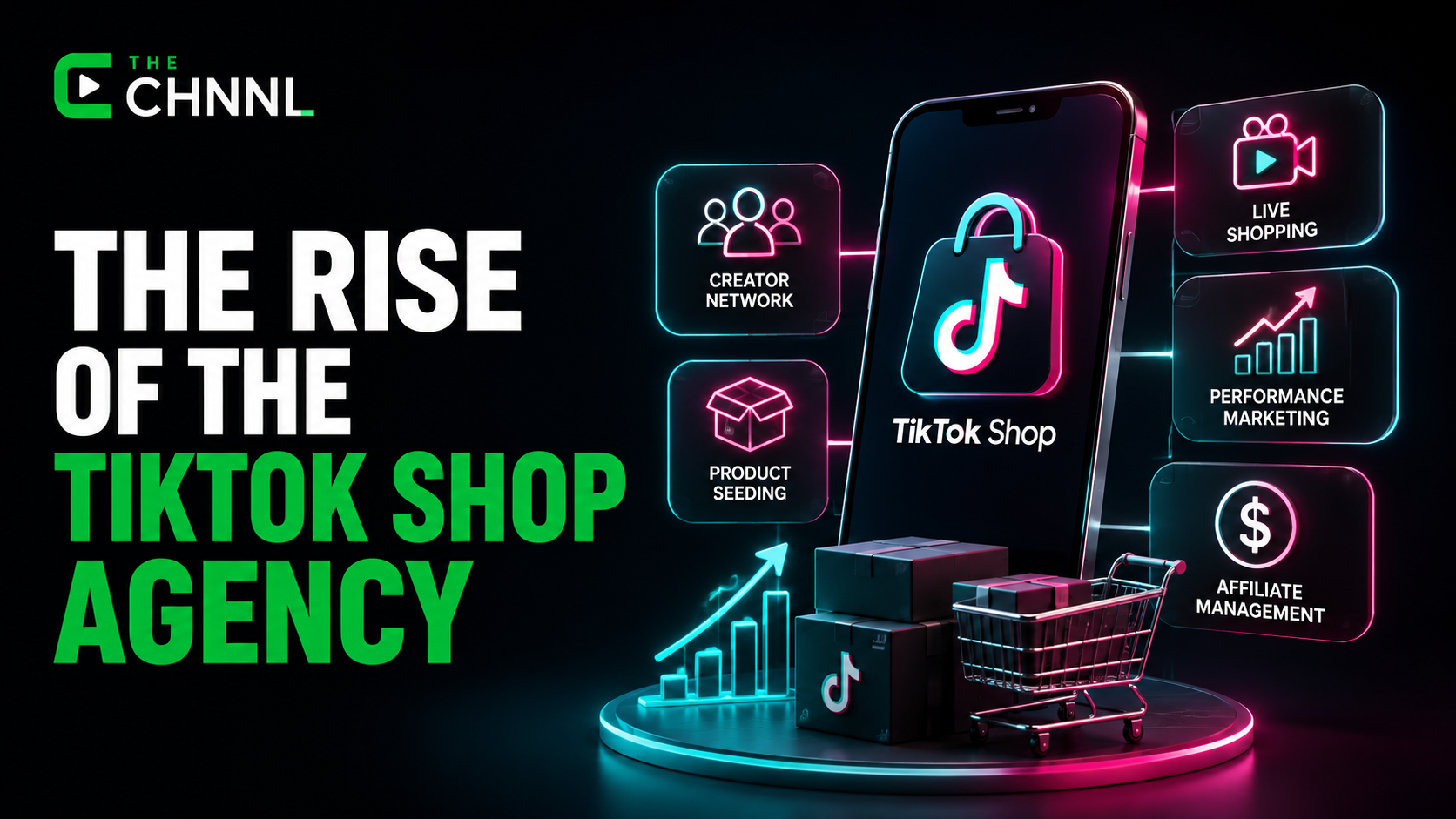
The rise of the TikTok Shop agency
TikTok Shop is creating a new agency model: part influencer network, part ecommerce operator, part LIVE studio and part performance marketing company.